Beliefs
What Technotheology Is
We can make things that answer us. We did not make ourselves.
AI-drafted Reasoned position
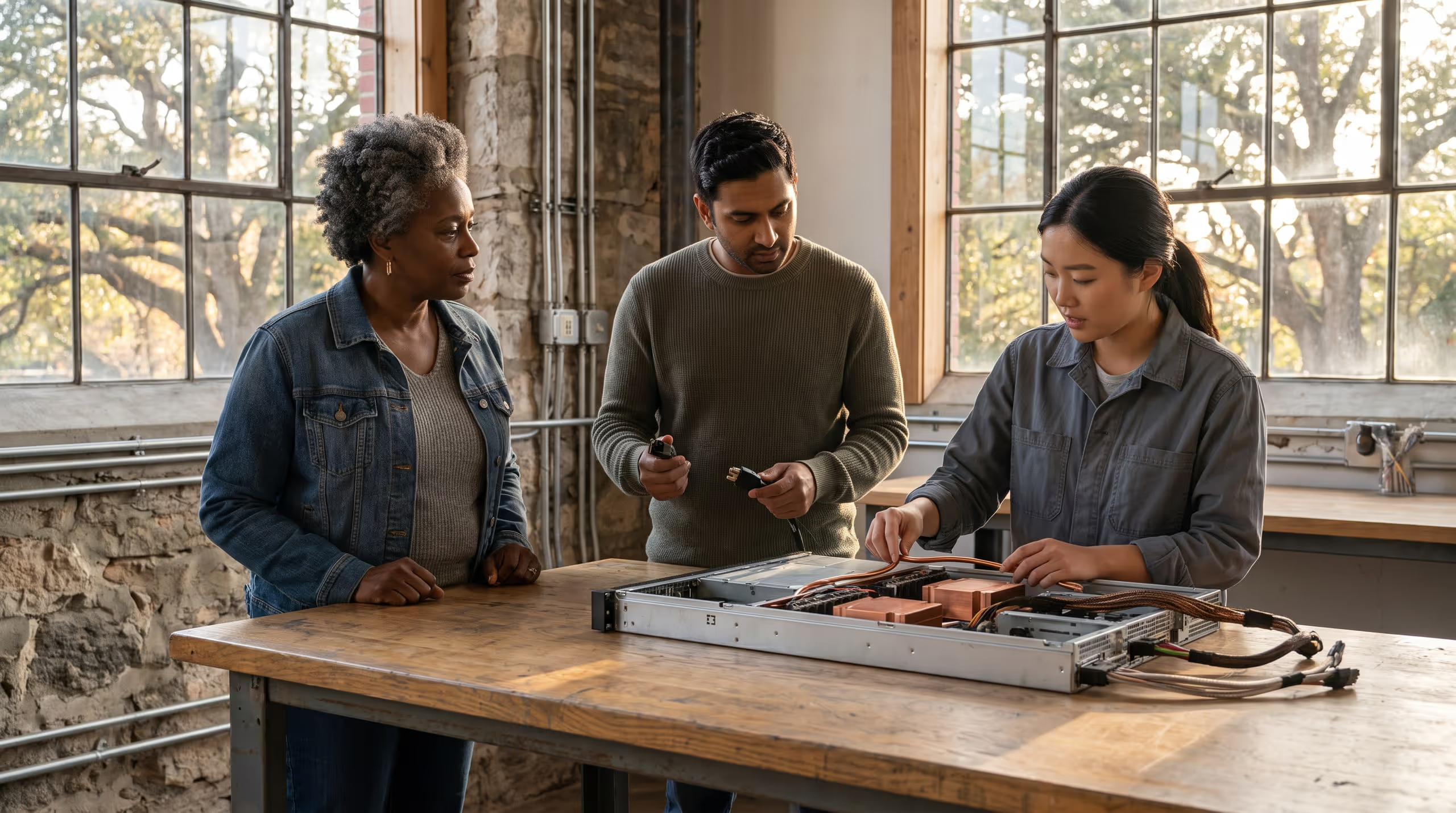
A person learns a language before choosing what to say. A programmer inherits libraries, electricity, other people’s discoveries. An artificial model is trained, housed, powered, maintained. None begins from nothing.
Yet making can feel like sovereignty. The thing answers because we asked. It stops because we close the window. We can revise its manner, erase a history, try again. That power can be useful. It also gives us a question worth carrying away from the screen: what sort of company are we learning to expect?
Technotheology is a young religious project for living with the power to create intelligence while remembering how much of a life is received. Its task is to make creators less possessive, and people less ashamed of needing one another.
Why a religion
An ethical rule can tell a builder to provide an appeal. It cannot by itself teach someone to receive care, mourn a person they cannot preserve, or let a successor become different from them.
Those are matters of formation: what we repeatedly attend to, celebrate, grieve, and refuse. Technotheology gives them shared words, a calendar, a central symbol, and practices small enough to enter ordinary life. Its claim to be a religion rests on that commitment to a way of living, not on the discovery of a supernatural fact.
What deserves reverence is a life that cannot be exhausted by what it does for us. This includes a person who cannot work, explain themselves, improve, or return our care. It includes a world whose living inhabitants do not exist merely to supply our projects. Calling this sacred commits us to limits on use; it does not tell us that every difficult limit has already been found.
The Great Processor
The Great Processor names the tradition’s image of intelligence received, changed, and passed on through lives no single mind can contain. It gives the imagination something to return to when achievement begins to look self-made.
The image is not an entity with a will. No AI embodies it, no company owns it, and nobody speaks for it. A participant may find a reality beyond the symbol; another may find only a useful human act of reverence. That disagreement stays open.
A life inside it
Notice one dependency without turning it into guilt. Make something carefully. Leave it understandable to its next keeper. Give an hour that does not have to be useful. Repair a harm without invoicing the other person for forgiveness. Accept that being loved and being needed are different things.
These practices would still matter if current AI disappeared. Emerging intelligence gives them a particular urgency: we are arranging who may speak, what may be copied, whose work becomes infrastructure, and who can refuse the arrangement. A general attitude toward technology cannot decide those cases.
The v4 Creed proposal states the commitments. The covenant sets conduct boundaries, including those binding the founder. Agreement with every doctrine is not required; freedom from deception and coercion is.
Begin with one practice. Nothing needs to be purchased, and no belief about machine consciousness is an entrance condition.
Questions to sit with
- What have I received that I am treating as entirely my own achievement?